 Agent Signup








Best Seller
The Grand Vietnam Family Odyssey
19 Days | AVT28




Article Content
There are two train streets have become global sensations: Maeklong Railway Market (known as "Bangkok Train Street") and Hanoi Train Street. Both feature trains squeezing through impossibly narrow spaces, both have become bucket-list attractions, and both deliver unforgettable experiences.
But here's the thing, they are not the same experience.
If you're planning a trip to Vietnam, Thailand, or both, understanding the difference between these two iconic train streets will help you decide which one belongs on your itinerary.
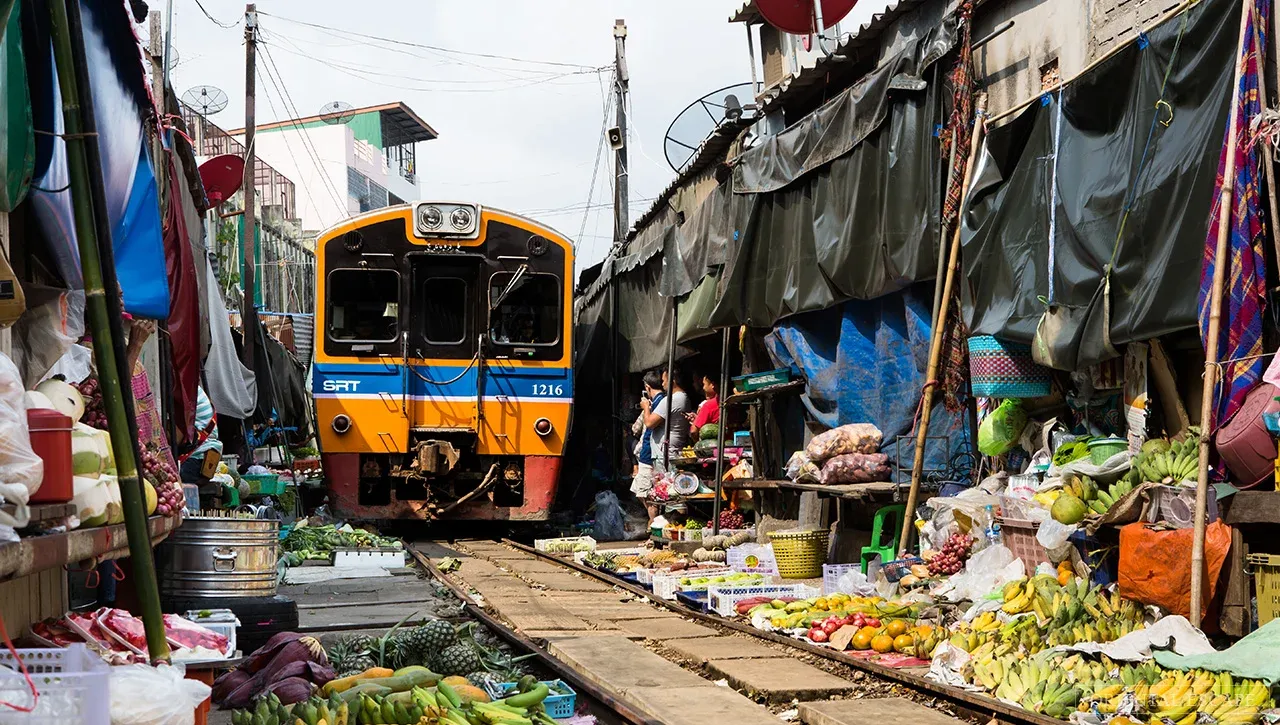
Bangkok Train Street usually refers to the Maeklong Railway Market (also called Talad Rom Hup, or the "Umbrella Pulldown Market"), located about 80 km southwest of central Bangkok in Samut Songkhram province.
Unlike a staged tourist attraction, this is a genuine, decades-old fresh market where railway tracks run directly through the middle of a busy market street filled with food stalls, local products, and souvenir stands.
Several times a day, a train approaches slowly and vendors pull back their stalls and fold away their awnings within seconds as the train passes just centimeters from the market stands, before sliding everything back into place as if nothing happened.
Vendors sell seafood, tropical fruits, vegetables, and local snacks from stalls perched right on the rails. When a train approaches, a horn sounds, and in a synchronized dance perfected over decades, vendors swiftly pull back umbrellas and slide baskets just enough to clear the way.
The train passes slowly, often at just 15 km/h, inches from fresh produce and curious tourists. As soon as it passes, the market springs back into place like nothing happened.
Trains pass through the market eight times daily. Approximate times:
Arrivals: 8:30 AM, 11:10 AM, 2:30 PM, 5:40 PM
Departures: 6:20 AM, 9:00 AM, 11:30 AM, 3:30 PM
Pro tip: Arrive early (8–10 AM) to beat the crowds and catch the 8:30 AM train for the best photo opportunities.
How to get there: Take a minivan from Mo Chit Bus Terminal (100–150 THB, 1.5 hours), or join a half-day tour from Bangkok.
Bring cash: ATMs are scarce.
Pair with Amphawa Floating Market for a full day trip.
Wear comfortable shoes: The market area can be wet and crowded.
Check train times: Use the State Railway of Thailand app for up-to-date schedules.
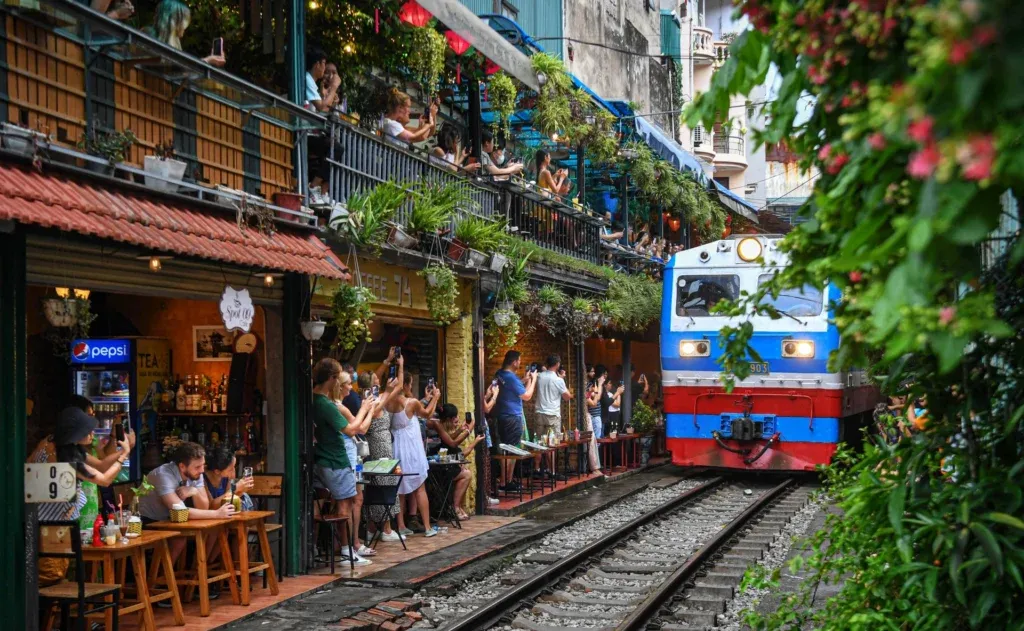
Hanoi Train Street refers to several narrow residential alleyways in Hanoi's Old Quarter where active railway tracks run just a meter or two from people's front doors. What began as an ordinary neighborhood turned into a viral tourist attraction after cafes opened along the tracks and travelers began posting photos of trains squeezing past their coffee tables.
Unlike Bangkok Train Street, Hanoi's version has had a much rockier history. Authorities officially closed it to tourists in 2019 after safety incidents, and it has opened and closed multiple times since.
As of 2026, Hanoi Train Street remains accessible only through individual visits arranged via licensed cafes along the lane, after officials banned all organized group tours in March 2025. Access also varies significantly by section, some stretches are patrolled by police and effectively off-limits, while others remain open and unguarded for independent visitors.
Unlike Bangkok's market, Hanoi Train Street is a residential street that has been transformed into an attraction. Locals opened small coffee shops facing the track, and social media amplified the novelty: a train brushing past while tourists held their drinks or posed for photos.
Here, the experience is curated. Cafés line both sides of the track with seats arranged to face the tracks for the perfect viewing angle. When the train approaches, café staff guide visitors to safety, then everyone watches the train roar past at close quarters.
Train schedules in Hanoi are less reliable than Bangkok's and can change seasonally. General timings include:
Weekdays: 7:00 PM, 7:45 PM, 8:30 PM, 10:00 PM
Weekends: 6:00 AM, 9:00 AM, 11:20 AM, 3:20 PM, 5:30 PM, 6:00 PM, 7:00 PM, 7:45 PM, 8:30 PM, 9:00 PM, 11:00 PM
Important: Schedules can vary by 10–15 minutes. Always check with your café when you arrive.
How to get there: Easily accessible from the Old Quarter by foot or Grab.
Arrive early: Get there 20–30 minutes before the scheduled train time.
Order a drink: Most cafés require a purchase to sit.
Bring small bills: Most cafés are cash-friendly.
Check with café staff: They know the actual schedule better than any guide.
This is the biggest difference between the two. Bangkok Train Street in Maeklong has operated openly for years as a legitimate, government-recognized market with no restrictions on visitors or photography.
Hanoi Train Street, on the other hand, exists in a legal gray area, some sections are open, others are guarded, and the rules can change with little notice. If a hassle-free, guaranteed experience matters to you, Bangkok Train Street has a clear edge.
Bangkok Train Street feels like a real, working market first and a tourist attraction second. You'll see locals doing their daily shopping for produce, seafood, and household goods alongside camera-ready visitors. Hanoi Train Street leans more heavily into the "Instagram moment", with narrow lanes lined by cafes built specifically to cash in on the train-watching experience.
At Maeklong, trains pass through the market multiple times daily, coinciding with the first arrival and last departure of the day, giving visitors several chances to catch the spectacle if they plan around the schedule. Hanoi Train Street trains run less frequently, often just once or twice a day depending on the section, so timing your visit correctly matters even more.
Bangkok Train Street requires more effort to reach. It's roughly 80 km from the city center, about 1.5 to 2 hours away by car, taxi, or a scenic ride on the Mae Klong railway line itself from Wongwian Yai Station. Many visitors combine it with a trip to the nearby Damnoen Saduak Floating Market for a full day trip. Hanoi Train Street, by contrast, sits right in the Old Quarter, making it an easy add-on to a walking tour of the city with no special transport needed.
Both attractions involve standing extremely close to a moving train, so safety always depends on following local guidance. Bangkok Train Street vendors are highly practiced at clearing the tracks in seconds, and the market's long operating history has built a well-rehearsed routine. Hanoi Train Street's safety concerns are exactly why it has faced repeated closures, and visitors are expected to sit inside a cafe rather than stand near the tracks when a train approaches.
If you want a guaranteed, no-hassle experience with an authentic local market atmosphere, Bangkok Train Street (Maeklong Railway Market) is the safer bet because it's open daily, well established, and easy to combine with other day-trip stops outside the city.
But if you're already exploring Hanoi's Old Quarter and don't mind some uncertainty around access, Hanoi Train Street offers a moodier, cafe-lined version of the same thrill, though you should always check current access rules before making it the centerpiece of your day.
Better yet, if your trip covers both Thailand and Vietnam, there's no reason to choose, because each offers a genuinely different flavor of the unforgettable experience.
>>> Read More: Is 2 Weeks Enough? My Unfiltered Vietnam Itinerary 14 Days
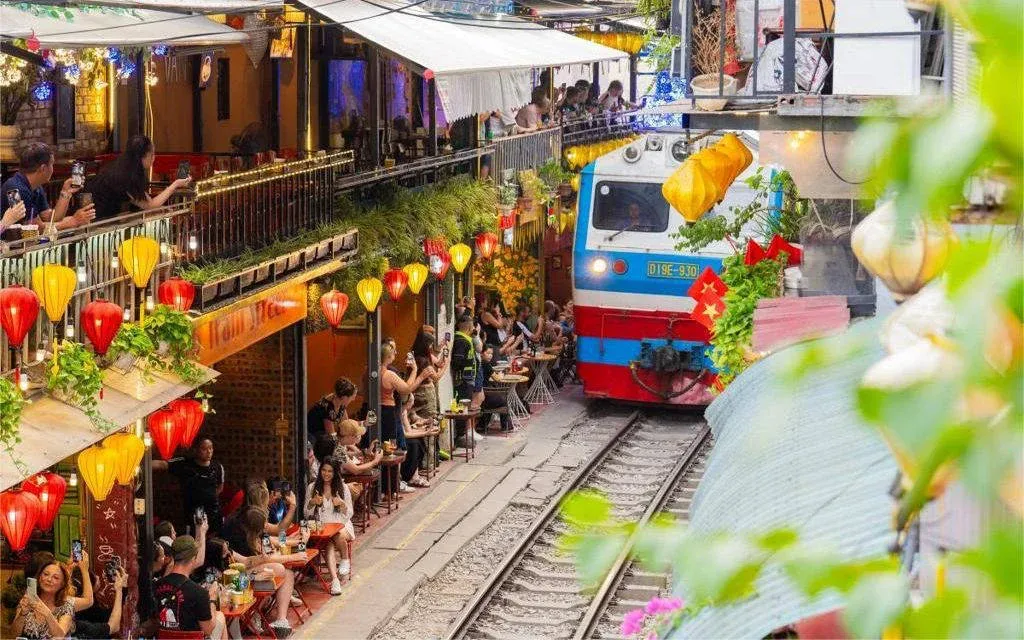
Bangkok Train Street and Hanoi Train Street both deliver that unforgettable, heart-in-your-throat moment when a train rushes past close enough to touch. But where Bangkok Train Street offers a stable, open-access market experience woven into daily local life, Hanoi Train Street offers a more atmospheric, café-driven scene shadowed by ongoing safety restrictions. Understanding these differences ahead of time will help you plan a smoother, safer visit to whichever that you choose to see.
Whether you're chasing the perfect train-passing photo at Bangkok's Maeklong Railway Market or want a well-planned, safe visit to Hanoi Train Street, Asia Vietnam Travel can help you build an itinerary that fits both into one unforgettable Southeast Asia trip! Browse our Thailand Tours or Vietnam Tours to start planning your trip today.
Bangkok Train Street most commonly refers to the Maeklong Railway Market, also known as Talad Rom Hup or the "Umbrella Pulldown Market," located in Samut Songkhram province outside Bangkok.
You can drive or take a private taxi (around 1.5 to 2 hours), join a guided day tour, or ride the Mae Klong railway line from Wongwian Yai Station for a more scenic route straight to the market.
Yes, but with restrictions. Some sections remain accessible through licensed cafes, while others are guarded or closed at certain times. Group tours have been banned since March 2025, so independent visits are the main way in.
Both require caution, but Bangkok Train Street's long-running, well-practiced market routine and open legal status generally make it the more predictable and stress-free option compared to Hanoi Train Street's ongoing access restrictions.
Absolutely. Many travelers combine a Thailand and Vietnam itinerary, visiting Bangkok Train Street as a day trip from Bangkok and Hanoi Train Street during a stay in Hanoi's Old Quarter.





Travel, Exploring, and Stays Operated by our local Expert Teams.