 Agent Signup





Best Seller
The Grand Vietnam Family Odyssey
19 Days | AVT28



Article Content
If you ever wander through Hoi An Old Town, there’s a high chance you’ll “accidentally” end up at the Japanese Bridge. I say accidentally because no one really rushes there like a checklist stop. It just… appears. And somehow, you slow down without realizing why.
As a guide who has walked these yellow-walled streets for years, I can tell you that this bridge isn’t just a "photo spot". It is a living witness to four centuries of history, a symbol of international friendship, and a spiritual anchor for the people of this ancient town. Today, I’m going to take you beyond the red-painted wood and into the legends, the architecture, and the soul of this iconic monument.
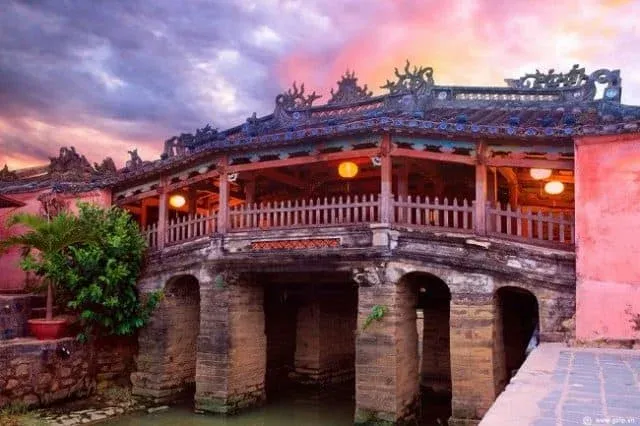
The Japanese Bridge Hoi An dates back to the early 1600s, built by Japanese traders who once lived in the town. Back then, Hoi An wasn’t just pretty, it was busy! Ships came and went, cultures mixed, and people from different parts of Asia built lives side by side. Hoi An was one of the busiest trading ports in Southeast Asia back then.
The bridge connected the Japanese quarter to the Chinese side. On the east side of the canal lived the Chinese merchants. On the west side lived the Japanese community. At that time, the Japanese influence on Hoi An was massive. They brought their silver, copper, and high-quality porcelain to trade for Vietnamese silk, spices, and agarwood.
Over time, it became something bigger. We now see the Japanese Bridge as a quiet symbol of how different communities coexisted and shaped the town together.
There’s also this story locals like to share. They say the bridge was built to “pin down” a giant mythical creature that caused earthquakes. Whether that’s true or not, I kind of like the idea. It makes the bridge feel less like architecture and more like folklore you can walk on.
If you look closely at the Japanese Bridge, you’ll notice it doesn't look like a typical Vietnamese bridge. It is a "Bridge-Pagoda" (Thuong Gia Ha Kieu), meaning "house above, bridge below".
The Japanese Influence: You see it in the simplicity of the lines and the original foundation. The roof has a subtle curve, and the wooden pillars are sturdy and functional.
The Chinese Influence: Look at the porcelain decorations on the roof. These "yin-yang" tiles and the intricate carvings of dragons and phoenixes were added later by Chinese and Vietnamese artisans during various restorations.
The Vietnamese Soul: The bridge is made from high-quality Vietnamese wood, specifically ironwood, which has allowed it to withstand the humid, salty air of the coast for over 400 years.
Locating the Japanese Bridge is quite simple once you are inside the Hoi An Ancient Town, as it serves as the primary "anchor" for the western end of the heritage zone. At AVT Travel, we specialize in comfortable logistics, ensuring you find the most scenic and stress-free routes to these historic landmarks. Here is exactly how to find it:
The Walking Route: Most visitors start their journey at the Hoi An Market or the Central Square. Simply walk west along Tran Phu Street, then follow the yellow walls and lantern-lined shops for about 10 minutes, and you will walk directly into the bridge's entrance.
The Riverfront Approach: If you are enjoying a stroll along the Bach Dang Riverfront, walk toward the western end of the quay (away from the colorful cargo boats). Turn right at the intersection near the An Hoi Sculpture Garden, and the bridge will appear over the canal.
From Outside the Old Town:
By Bicycle: If you are staying at a homestay in the rice fields or near An Bang Beach, pedal toward the "Old Town" entrance. Many hotels in Hoi An offer bike rentals. You’ll need to park your bike at one of the designated parking stations at the edge of the pedestrian zone (usually 5,000–10,000 VND), as cycling is restricted on the bridge itself.
By Grab/Taxi: Simply set your destination to "Chua Cau" or "186 Tran Phu". The driver will drop you off at the nearest accessible gate, and it’s a short 2-minute walk from there.
Note on Entry: While you can view the exterior of the bridge for free, you will need a Hoi An Ancient Town Entry Ticket (120,000 VND for 5 sightseeing spots) actually to walk across the interior.
As part of AVT’s commitment to seamless travel, our guided tours often include these tickets in advance, so you can bypass the ticket booths and head straight into the history! Keep your ticket handy, as there is usually a staff member at either end of the bridge to check it!
If you’re an early riser, go at sunrise (6:00 AM to 7:30 AM). The streets are still half-asleep, and the bridge feels almost private. It’s one of those rare moments where you can just stand there without people brushing past you.
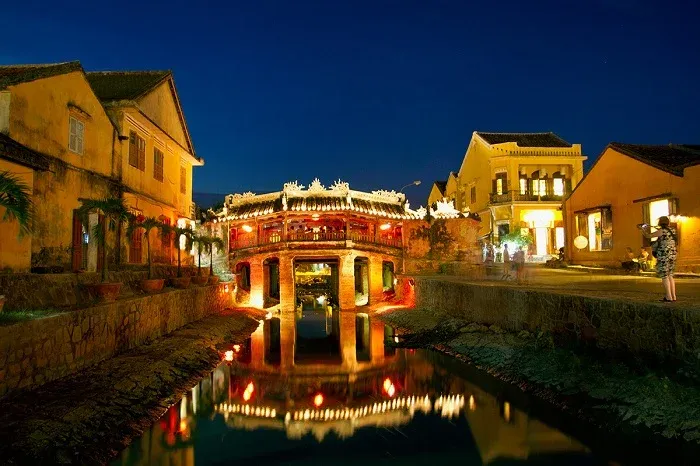
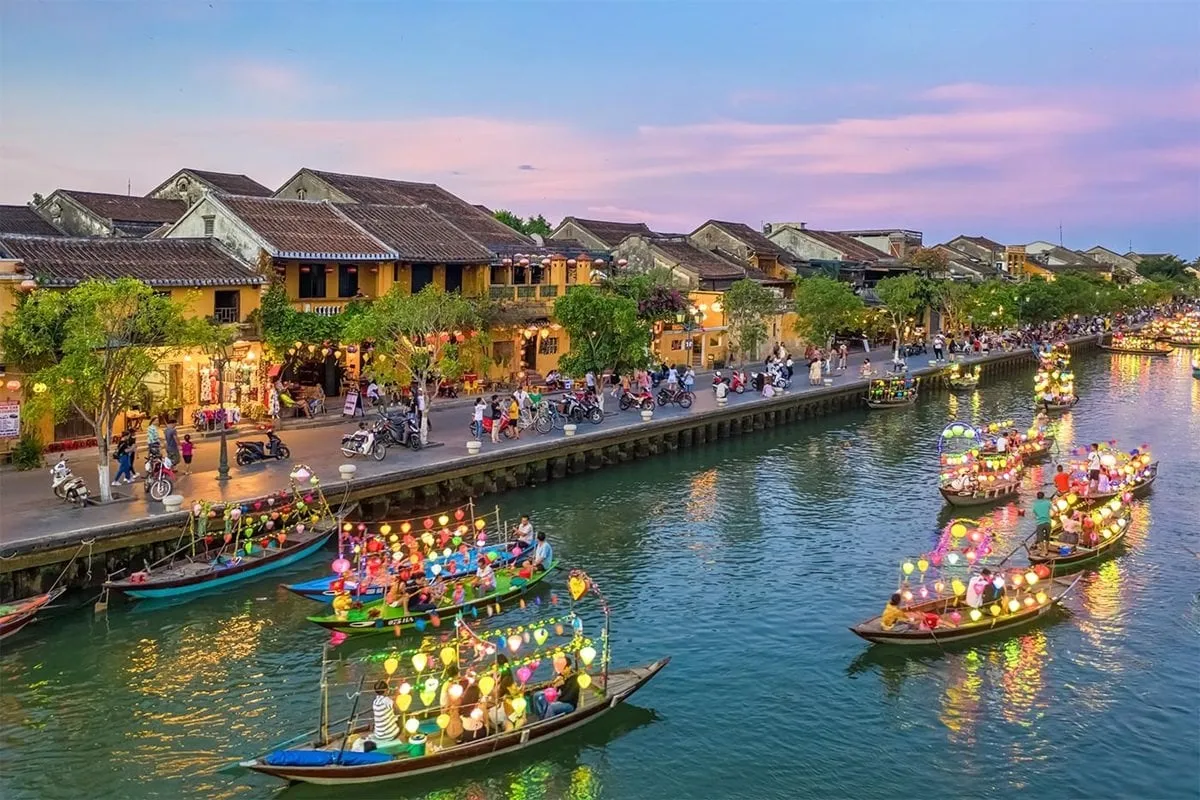
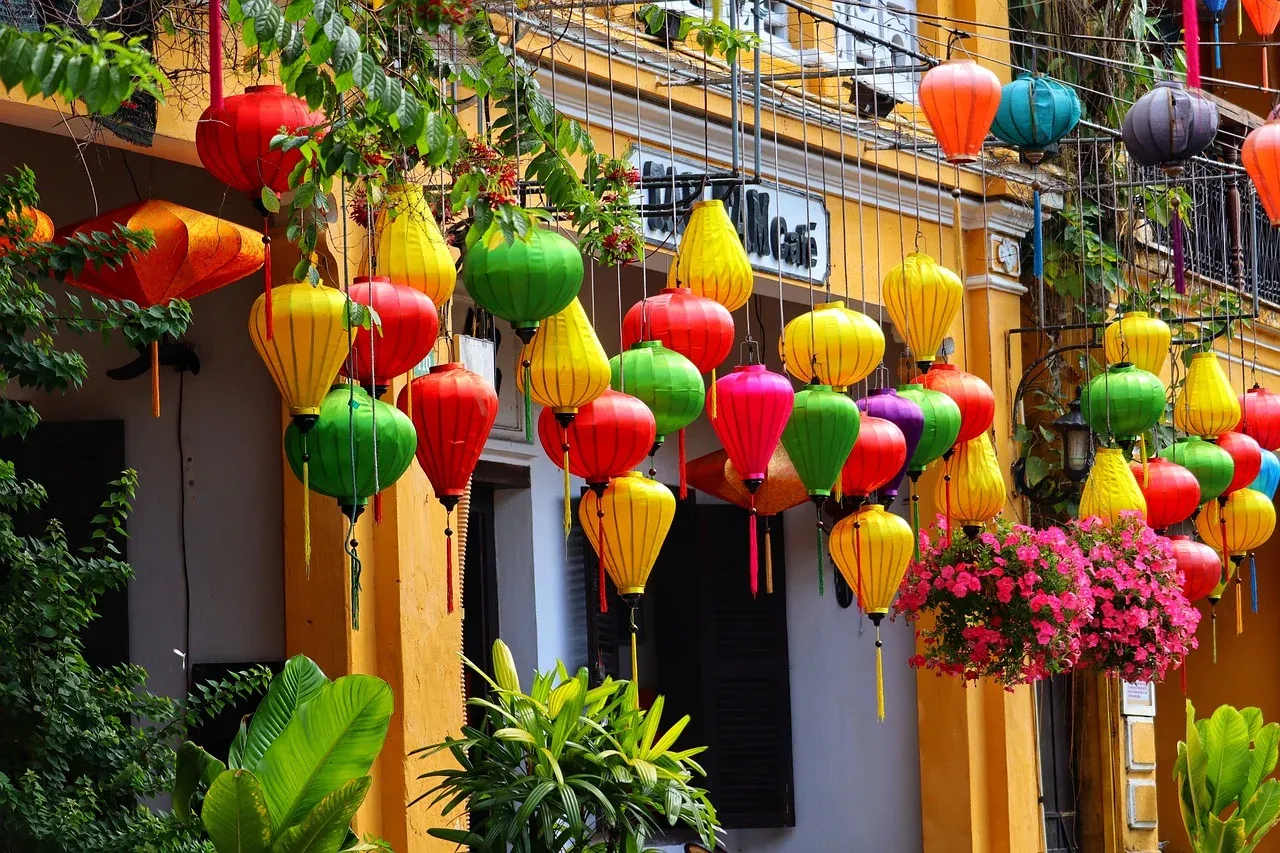
At night (after 6:00 PM), it’s a completely different scene. Lanterns light up, reflections dance on the water, and the whole area feels warmer, more alive. The Japanese Covered Bridge blends into that atmosphere, but still holds its own quiet presence.
Personally, I think both are worth experiencing. Morning for the calm. Evening for the mood.
Once you’ve paid your respects to the God of the North and snapped your photos, don't head back to your hotel just yet! Within a 5-minute walk of the Japanese Bridge, you’ll find several other gems that complete the story of Hoi An.
>>>> Check out our blog on A day living peacefully and mindfully in Hoi An!
Located just west of the bridge, this is one of Hoi An’s most famous private heritage houses. Built over 200 years ago, it represents a unique fusion of Vietnamese, Japanese, and Chinese styles. You should look for the trapdoor on the ceiling! It was used to move furniture to the second floor during the annual floods!
This house has a quieter, more "academic" soul. Once a traditional Chinese medicine dispensary and later a meeting place for anti-colonial revolutionaries, it remains remarkably authentic. The dark, polished wood and antique furniture make it feel like you’ve stepped back into the 1800s.
Right across from the bridge on Tran Phu Street, look for the grand entrance with the colorful dragon statues. This hall was built by Cantonese merchants in 1885. The highlight here is the massive dragon fountain made from fragments of porcelain - a stunning example of Cantonese artistry.
If you cross the small modern bridge right next to the Japanese Bridge, you’ll enter the An Hoi area. This is where the famous Hoi An Night Market sets up every evening. It’s the best place to buy silk lanterns or take a traditional rowboat ride to see the Japanese Bridge glowing from the water.
For the history buffs, this museum houses artifacts from the pre-Champa era. It’s located in a beautiful colonial-style building and offers a deep look into the people who lived in this port long before the Japanese and Chinese merchants arrived.
>>>> Explore other Popular Destinations in Vietnam here!
Pay Your Respects at the Altar: Step inside the small temple (Chua Cau) located on the north side of the bridge. Even if you aren't religious, the atmosphere is incredibly grounding. You’ll see locals praying to Bac De Tran Vu for protection against natural disasters.
The "Under-the-Bridge" Boat Ride: One of the most serene experiences in Hoi An is hiring a traditional small sampan boat. Ask your rower to navigate through the canal right under the bridge’s wooden belly. You’ll get a unique "architect's view" of the massive ironwood pillars and the stone foundations that have held up the structure since the 1590s.
Release a Floating Lantern: As the sun sets, the area around the bridge becomes a sea of flickering lights. For a few thousand Dong, you can buy a paper lantern from a local vendor. Light the candle, make a wish, and set it afloat on the Hoai River. Watching your lantern drift past the illuminated bridge is a quintessentially "Hoi An" moment.
The "Street Life" Snapshot: The Japanese Bridge in Hoi An is one of the most popular photography spots in Hoi An, which can provide an iconic backdrop for your Instagram post!
Find the 20,000 VND View: Pull out a blue 20,000 Vietnamese Dong banknote. Hold it up and align the image on the back of the bill with the real bridge in front of you. It’s the ultimate "I was here" photo for any traveler in Vietnam.
Make a Wish from the Water: After walking across the bridge, head down to the riverbank. During the evening, you can buy a small paper lantern with a candle inside for about 10,000–20,000 VND ($0.50–$1.00). Light it, make a wish, and release it into the Hoai River with the bridge glowing in the background.
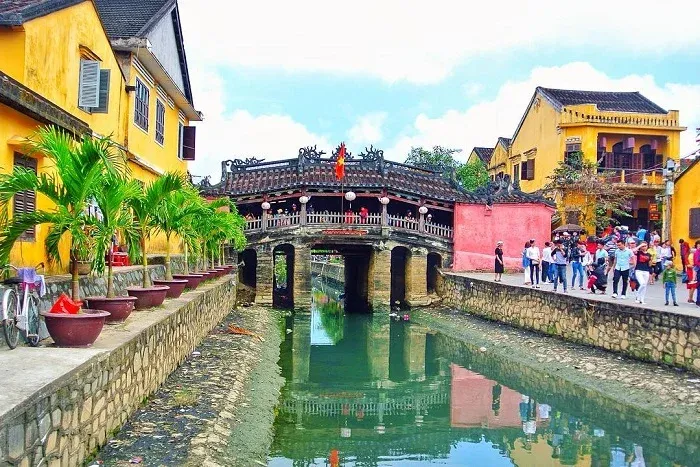
If you’ve visited recently, you might have noticed the bridge looking a bit "fresher". Between 2022 and 2024, the Japanese Bridge underwent its most significant restoration in decades.
Centuries of floods and millions of footsteps had taken their toll. Specialists painstakingly dismantled the bridge, piece by piece, to reinforce the foundation and treat the ancient wood.
The goal wasn't to make it look "new" but to ensure it would remain standing for another 400 years. The restoration has sparked a lot of debate among locals and historians. Some miss the weathered, dark patina of the old wood, but structural integrity was the priority. It remains the only bridge in the world featured on a national banknote (check your 20,000 VND bill!).
As your guide, I want you to have the best experience possible. Here is how to truly enjoy the Japanese Bridge:
Respect the Sanctuary: Remember, the interior is a place of worship. Remove your hat, keep your voice low, and please, no flash photography inside the altar area.
Look for the 20,000 VND Note: Hold up the blue 20,000 VND bill next to the bridge. It’s a classic Hoi An photo op!
There are bigger bridges. More impressive ones, too. But the Japanese Bridge in Hoi An isn’t trying to impress you. It’s just there, quietly holding onto history, stories, and everyday life all at once.
And maybe that’s why it lingers. Not because it’s the most spectacular place you’ll visit, but because it feels real. Like something that has been part of people’s lives for centuries… and still is.
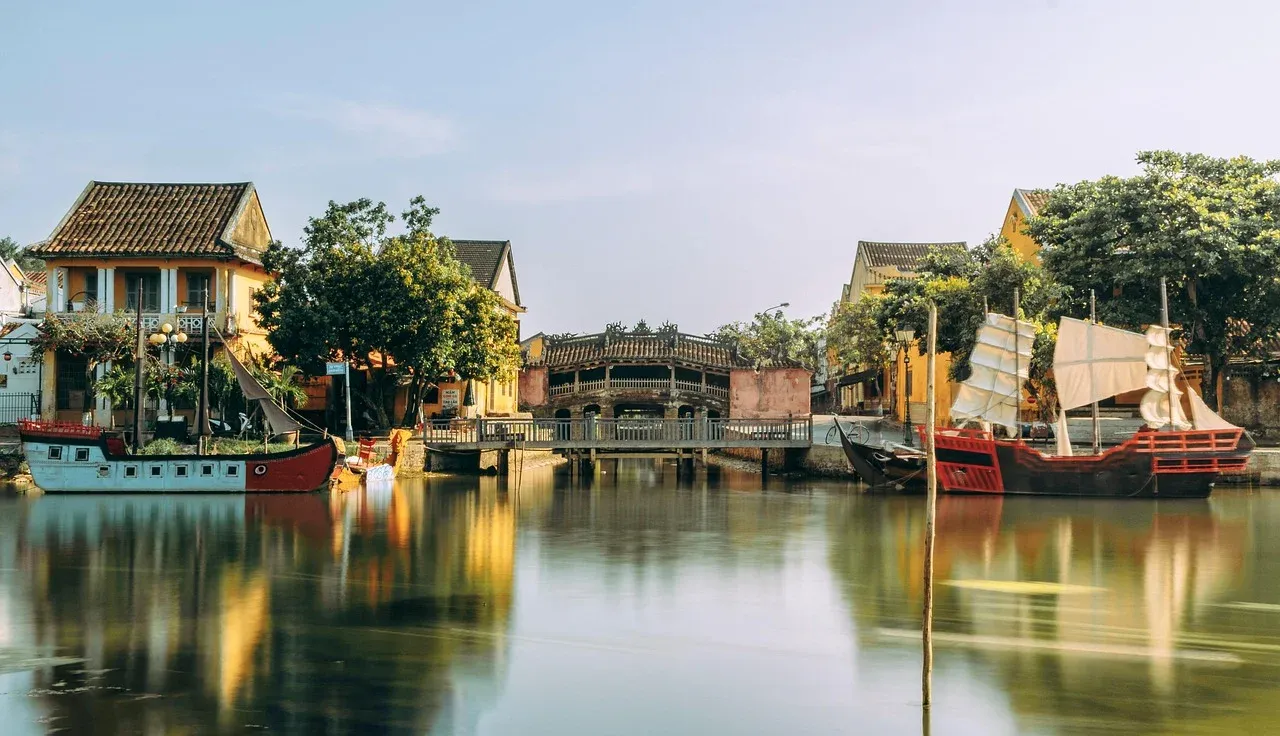 Reading about the Japanese Bridge is one thing, but feeling the vibration of the ancient wood beneath your feet and smelling the incense in the air is another. At AVT Travel, we don't just "show" you the bridge; we tell you stories that the stones can't speak.
If that sounds like your speed, check out our Hoi An to Hue: Royal Tales & Coastal Fun trip. We handle the drive over the Hai Van Pass and all the tickets, but we keep the vibe relaxed. It’s about the stories of the royal family and the coastal views, not just hitting a checklist!

Travel, Exploring, and Stays Operated by our local Expert Teams.